
Honeycomb activated carbon
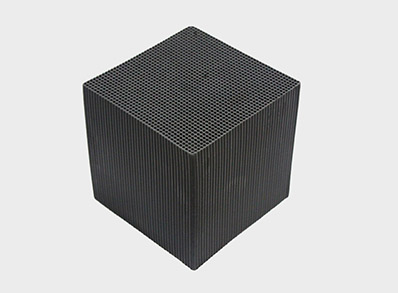
Honeycomb activated carbon is made by pressing activated carbon powder and other specific materials. Currently, there are two types of honeycomb activated carbon in the water purification market: one is water-resistant and the other is not water-resistant.
Order Hotline : Inquire Now- Honeycomb activated carbon introduction
- Honeycomb activated carbon product description
- Honeycomb activated carbon performance characteristics
- Honeycomb activated carbon how to use
Honeycomb activated carbon is made by pressing activated carbon powder and other specific materials. Currently, there are two types of honeycomb activated carbon in the water purification market: one is water-resistant and the other is not water-resistant.
Honeycomb activated carbon is made by pressing activated carbon powder and other specific materials. The manufacturing process involves many steps: raw material grinding, screening, stirring, sludge preparation, sludge refining, decomposition, pressure filtration, drying, sintering, testing, packaging, and warehousing. Currently, there are two types of honeycomb activated carbon on the water purification market: water-resistant and non-water-resistant. However, other technical specifications are the same. Production can be customized to meet different customer requirements. Commonly used types are: 100x100x100 mm, 50x50x100 mm, and 100x100x50 mm (different sizes of honeycomb activated carbon can be made by adjusting the mold size). For more detailed information, please call our website.
Application Industries: Chemical, electronics, pharmaceutical, medical, industrial, shipyard, food, automotive, metallurgical, steel, and other applications for ventilation, exhaust gas, and tail gas treatment.
Honeycomb activated carbon has a large surface area, strong adsorption capacity, and long service life. Each pore is well-developed, allowing for extensive contact with waste gas. Harmful gases in the waste gas are adsorbed and decomposed, thus purifying the exhaust gas. Honeycomb activated carbon can be widely used for treating exhaust gases or waste gases requiring purification, as demonstrated by numerous examples. Its purification effect is stronger than that of ordinary activated carbon. Currently, it can remove pollutants such as chlorine, benzene, formaldehyde, acetone, ethanol, ether, nitrogen oxides, carbon tetrachloride, methanol, and odors. Honeycomb activated carbon soaked in chemical agents can effectively remove hydrogen sulfide, ammonia, mercury, carbon monochloride, dioxins, acid mist, alkaline mist, amines, and mercaptans.
Honeycomb activated carbon can be used directly or placed in a purification cabinet or adsorption bed. If the waste gas concentration is still high and the discharge volume is large, a purification cabinet or adsorption bed can be added for continuous colloidal application. During use, if the waste gas temperature is too high, the adsorption capacity will decrease. There is an inverse relationship between adsorption capacity and temperature; the faster the temperature rises, the faster the adsorption capacity decreases, and vice versa. Another situation to note is avoiding high concentrations, oil mists, and high dust content. Tar can clog the micropores of the honeycomb activated carbon, increasing resistance and reducing adsorption efficiency. If this occurs, it is best to install a dust filter before use to achieve the best purification effect and extend the service life.