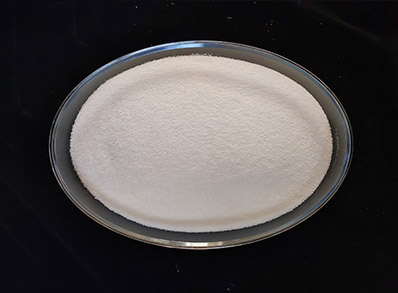

cationic polyacrylamide
Cationic polyacrylamide (CPAM) is a type of polyacrylamide. It is a linear polymer with a high ionic content; the higher the degree of ionization, the more expensive the polyacrylamide. Therefore, it is highly reactive and can quickly and effectively adsorb impurities and particulate matter in water, flocculating and forming hydrogen bonds, mostly in a charged colloidal form.
Order Hotline : Inquire Now- cationic polyacrylamide introduction
- cationic polyacrylamide product description
- cationic polyacrylamide performance characteristics
- cationic polyacrylamide how to use
Cationic polyacrylamide (CPAM) is a type of polyacrylamide. It is a linear polymer with a high ionic content; the higher the degree of ionization, the more expensive the polyacrylamide. Therefore, it is highly reactive and can quickly and effectively adsorb impurities and particulate matter in water, flocculating and forming hydrogen bonds, mostly in a charged colloidal form.
Cationic polyacrylamide is mostly a charged colloidal substance with some viscosity, while anionic polyacrylamide has excellent properties such as demixing, turbidity removal, adsorption, flocculation, and agglomeration. Therefore, it is widely used in industries such as printing and dyeing, coal washing, mineral processing, metallurgy, steel, oil fields, textiles, waterworks, and drinking water, especially in desliming and dewatering.
1. It has good water solubility, dissolving well even in cold water.
2. It requires a small dosage to achieve good flocculation. The water purification effect is even better when used in combination with other inorganic flocculants.
3. It has a wide range of applications; cationic polyacrylamide is highly adaptable.
1. When used as a flocculant, polyacrylamide is typically prepared as a 0.1% solution dissolved in water.
2. Cationic polyacrylamide is mostly used in sludge dewatering.
3. When dissolving in water, continuous and uniform stirring is necessary. The optimal water temperature is above 60 degrees Celsius for the fastest dissolution rate.
4. Add the PAM solution to the wastewater and stir continuously to ensure it dissolves fully, allowing for adsorption, flocculation, and sedimentation, ultimately achieving water purification.