As a chemical product, polyacrylamide (PAM) not only determines its application field, performance, model and raw material ratio, but also determines its price, one of the important indicators is ionization, the ionization index generally refers to cationic polyacrylamide (CPAM)., is one of the important indicators of cationic series products. As the saying goes, buying right is not wrong, which is very reasonable for polyacrylamide (PAM). The higher the ionization of cationic polyacrylamide (CPAM), the more expensive it is. But it does not mean that the higher the ionic degree, the corresponding application effect will be better. So what is the meaning and difference of polyacrylamide (PAM) ionization? The following Henan Laixing Water Purification will answer this question in detail.
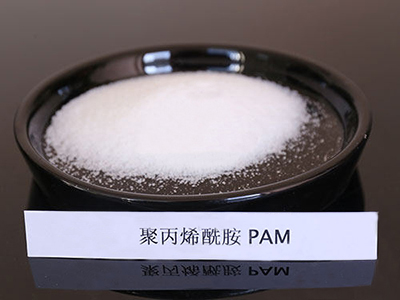
Ionism refers to the cationic concentration or positive charge density (also known as positive charge density) of cationic polyacrylamide (CPAM), which refers to the density of charged particles formed by atoms or groups of atoms due to the gain and loss of electrons.
How to choose the right ionization degree product?
Under normal circumstances, it is recommended to conduct a beaker test in the laboratory, dissolve, add and test products with different ionic degrees, and select products with appropriate ionization degrees through performance effects.
What is the range of the ionic index?
Theoretically, the ion index ranges from 5 to 100%, but in actual mass production and common products on the market, the ion index is generally 5 to 80%.
The molecular structure of cationic polyacrylamide (CPAM) is a reticulated polymer, so when indicating its model, it is mainly expressed according to its ionic degree, including: 5, 10, 15, 20, 25, 30, 35, 40, 45, 50, 55, 60, 65, 70 and so onThe lower the molecular weight of cationic polyacrylamide (CPAM).