In the later stage of sewage treatment, a large amount of sludge will be generated, and the sludge needs to be mechanically dewatered during treatment, and then the sludge will be treated harmlessly. To dewater sludge, it is first necessary to understand the source, properties, composition and solids content of sludge. In sludge dewatering, which type of polyacrylamide (PAM) product to choose is directly related to the sludge dewatering efficiency. Among them, cationic polyacrylamide (CPAM) is a very effective sludge dewatering agent. According to the main components of sludge, sludge can be divided into organic sludge and inorganic sludge. Generally, cationic polyacrylamide (CPAM) is used to treat organic sludge and anionic polyacrylamide (HPAM) is used to treat inorganic sludge. However, in most cases, cationic polyacrylamide (CPAM) is suitable for sludge dewatering.
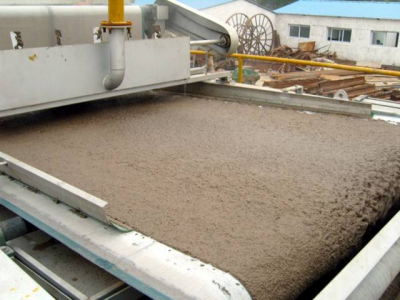
Cationic polyacrylamide (CPAM) can be divided into weak cationic type, medium cationic type and strong cationic type according to the ionic degree. It has been widely used in practical applications. Cationic polyacrylamide (CPAM) is mainly used in sludge dewatering Its ionization degree is related, the higher the ionization, the more closely the colloidal particles in the sludge will be linked, and the higher the molecular weight, the larger the floccules produced.
At present, mechanical dewatering is the main way of sludge dewatering. Plate and frame filter presses, belt filter presses, centrifugal filter presses and other equipment are mainly used for sludge dewatering, and cationic polyacrylamide (CPAM) can be used before pressing the sludge The positive charge attached to the molecular chain neutralizes the negative charge in the sludge colloidal particles, accelerates the agglomeration of sludge, and uses its long molecular chain to wrap the sludge particles together, playing the role of flocculation and agglomeration, so as to reduce the moisture content of the sludge and clarify the water quality.