For users of polyacrylamide (PAM), it can be understood that one of the criteria for measuring the quality of polyacrylamide (PAM) is the number of mesh of polyacrylamide (PAM). But how is the so-called mesh defined? Does polyacrylamide (PAM) mesh count affect quality? Does the mesh number of polyacrylamide (PAM) determine the quality?
Polyacrylamide (PAM) is a polymerized water-soluble polymer, which is mainly divided into two categories: dry powder and colloid. Polyacrylamide (PAM) has good flocculation properties and can reduce the resistance between liquids. Polyacrylamide (PAM) can be divided into non-ionic type, anionic type, and cationic type according to its ionic propertiestype and zwitterionic type. Polyacrylamide (PAM) is insoluble in most organic solvents such as methanol, ethanol, acetone, ether, aliphatic hydrocarbons, and aromatic hydrocarbons. Except for polar organic solvents such as acetic acid, acrylic acid, chloroacetic acid, ethylene glycol, sesame oil, molten urea, formamide, etc., the solubility of these organic solvents is limited and usually requires heating, otherwise there is no application value.
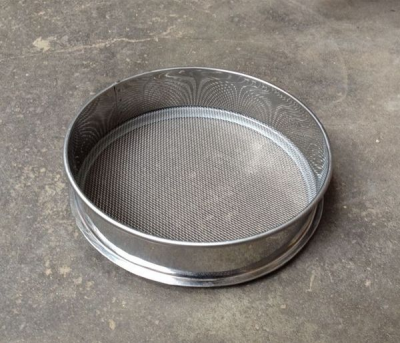
Polyacrylamide (PAM) mesh refers to the particle size or coarse fineness of a solid, and the grid number is the square number per unit area. The general definition refers to the number of grids in a 1-inch area of the screen, i.e. the number of meshes. For example, 300 mesh is 300 mesh per square inch, and the mesh size of polyacrylamide (PAM) is 35-80 mesh, that is, 0.6mm-0.2mm, that is, the mesh size of granular polyacrylamide (PAM). The particle size of polyacrylamide (PAM) can be controlled at about 100 mesh. The larger the number of sieve holes, the easier it is for polyacrylamide (PAM) to dissolve. But the mesh size of polyacrylamide (PAM) alone cannot measure product quality!