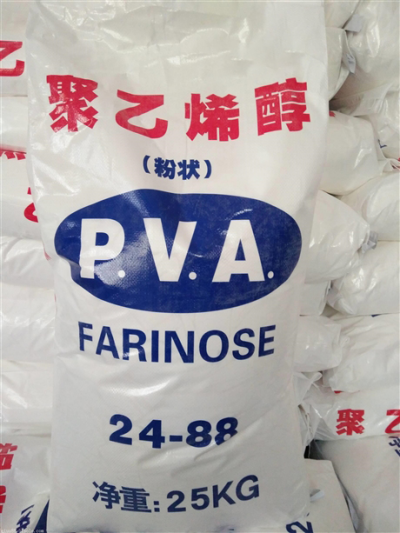
Polyacrylamide (PAM) is widely used in the glue and coatings industry to increase viscosity, retain water, lubricate and change fluid properties. Polyacrylamide (PAM) for construction adhesives mainly uses high molecular weight anionic polyacrylamide (HPAM) and nonionic polyacrylamide (NPAM). The commonly used raw materials in construction adhesives are 107 glue, 108 glue, 801 glue, 901 glue, etc., and other raw materials are polyvinyl alcohol, acrylamide (AM), etc., and their production processes are basically the same. Due to the disadvantages of acrylamide (AM) as an adhesive such as low strength, poor water retention, and fast construction drying speed, polyacrylamide (PAM) can replace acrylamide (AM) in traditional construction adhesives。 Polyvinyl alcohol has a certain strength due to its molecular structure as a network structure, polyacrylamide (PAM) is a polymer chain structure, which can greatly improve the strength of the glue, and has good water retention performance, and there will be no pilling and peeling phenomenon during construction.
So how to choose the right polyacrylamide (PAM) in the production of construction adhesives? Compared with cationic polyacrylamide (CPAM), anionic polyacrylamide (HPAM) and: Nonionic polyacrylamide (NPAM) has the advantages of large molecular weight, high viscosity, and low price, making it an ideal choice in terms of practical application effect and cost-effectiveness. However, anionic polyacrylamide (HPAM) and nonionic polyacrylamide (NPAM) have their own characteristics. For example, anionic polyacrylamide (HPAM) has high viscosity, while nonionic polyacrylamide (NPAM) has good water retention. So in actual use, we should choose the right product according to our needs.
In polyacrylamide (PAM) for construction adhesives