With the development of the food industry, the treatment of food wastewater is also imminent. Since the food industry involves starch, sugar, beverages, canned food, meat, aquatic products, winemaking, rice and flour products, dairy products, soybean products, fermented condiments and other major food industries, the main pollutants in these wastewater are: suspended solid substances, oils, proteins, starches, colloidal substances, etc., sugar, acid, alkali, salt, sediment and other impurities are dissolved in wastewater, and there may be bacteria. The main characteristics of food wastewater are high content of COD, BOD, SS and oil, high content of organic matter and suspended solids, easy to perish, and belong to high concentration of organic wastewater. If these wastewater are not treated properly and discharged directly, they will eutrophicate the water body, lead to the death of aquatic organisms, deteriorate the water body, and cause great harm to environmental pollution. In addition to its excellent results in industrial wastewater treatment, polyacrylamide (PAM) also works well in food wastewater treatment. So which food wastewater treatment processes use polyacrylamide (PAM)? What is the role of polyacrylamide (PAM) for food wastewater treatment? The following Henan Laixing Water Purification will answer these questions in detail.
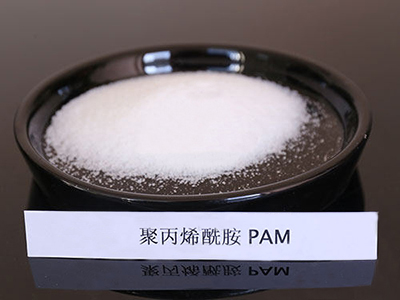
Which food wastewater treatment processes use polyacrylamide (PAM)?
In the food wastewater treatment process, the role of polyacrylamide (PAM) is mainly used in two stages:
1. In air flotation or sedimentation tanks, polyaluminum chloride (PAC) and polyacrylamide (PAM) are usually used for flocculation precipitation.
2. Use cationic polyacrylamide (CPAM) as sludge dehydrator for post-treatment of wastewater. Anionic polyacrylamide (HPAM) can also be used for individual sludge dewatering, which should be further tested and determined according to the actual situation.
What is the role of polyacrylamide (PAM) for food wastewater treatment?
Polyacrylamide (PAM) molecular chain contains a certain number of polar groups, which can adsorb suspended solid particles in water through charge neutralization, bridge particles or condense particles into large flocculates, thereby accelerating the sedimentation of suspended particles in food wastewater, accelerating solution clarification, and improving the filtration effect. Food processing wastewater has high COD and suspended solids content higher than other industries. Therefore, the use of polyacrylamide (PAM) can be well used to remove impurities from wastewater.