With the development of the construction industry, the rise of the ceramic industry is an inevitable trend. Ceramic factories use tens of thousands of tons of water every day, making ceramic wastewater treatment a challenge. The concentration of suspended solids in ceramic wastewater is very high, and if it is discharged directly without treatment, it will not only block rivers and wastewater, but also cause water pollution. The main source of ceramic wastewater is the wastewater discharged from the ceramic production process after forming and baking with clay, feldspar, limestone and other raw materials with appropriate dispersants and moisture. Polyacrylamide (PAM) has significant effects in industrial wastewater treatment and is low in use. It also has a wide range of applications in ceramic wastewater treatment. The following Henan Laixing Water Purification will answer the role of polyacrylamide (PAM) in wastewater treatment in ceramic factories in detail.
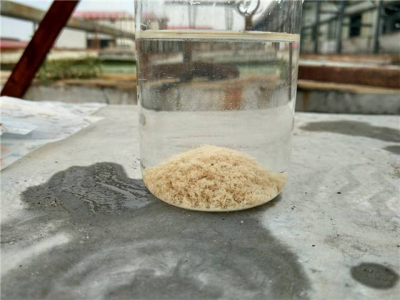
Ceramic wastewater is mainly generated by ball milling, cleaning filter cloth, glazing (cleaning), spray drying, grinding and polishing and other processes in the ceramic production process, and will also produce a certain amount of wastewater in the process of raw material transportation and surface washing. The concentration of suspended solids in ceramic wastewater is as high as 5000mg/L, and other heavy metals are also contained in the water. Large particles of suspended solids in wastewater precipitate naturally under the action of gravity. However, the particle size of most wastewater is less than 150um, which is close to the particle size of colloidal particles, and it is very difficult to separate.
According to the characteristics of ceramic wastewater, ceramic clay colloidal particles have a positive charge and stable performance. Therefore, inorganic flocculants (inorganic salts) or organic flocculants polyacrylamide (PAM) are usually used to neutralize the charge of colloidal particles. Because anionic polyacrylamide (HPAM) itself has a negative charge, it can bridge the particles by adsorbing suspended solid particles in water, and can also agglomerate the particles to form large flocculates through charge neutralization, thereby accelerating the sedimentation of particles in suspension, therefore, it has a very obvious effect on accelerating the clarification of the solution, promoting filtration, etc., after wastewater treatment, The water separated by solid and liquid can be recycled, produced and reused, which not only avoids environmental pollution, but also reduces the water consumption of enterprises to a certain extent, and reduces the production cost of water consumption of enterprises.