The main purpose of coal preparation in coal preparation plants is to improve the quality of raw coal, reduce ash content, and remove impurities. It is a process of washing out different grades of coal according to the content of raw coal components. Since the specific gravity of coal is less than that of water, the buoyancy of water can be used to separate coal and gangue. This process is called coal washing. A large amount of wastewater will be generated during the coal washing process. In this wastewater, there is a lot of pulverized coal. If not handled properly, it will cause waste of resources and environmental pollution. Polyacrylamide (PAM) has a good effect on coal washing wastewater and low cost. It is an indispensable water treatment agent in the treatment of coal washing wastewater. The following Henan Laixing Water Purification will answer the role of polyacrylamide (PAM) in coal washing plants in detail.
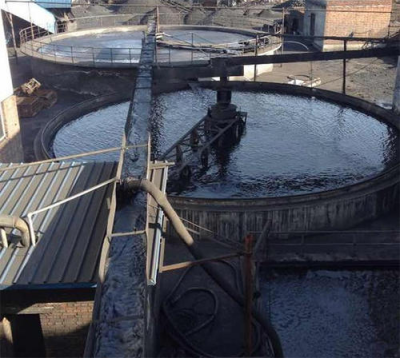
In the process of coal washing, a variety of agents will be used, such as foaming agents, flotation agents, defoaming agents, flocculants, etc., and the specific agents used are aluminum sulfate and iron sulfate used as coagulants. Polyaluminum chloride (PAC) is a coagulant and filter aid commonly used in coal preparation plants. When the cementation of coal sludge is serious, the effect of using flocculant alone is poor, and the coagulant must be added first to break the colloid, and then polyacrylamide (PAM) flocculant must be used.
Coal washing plants generally use anionic polyacrylamide (HPAM) to treat coal washing wastewater, with a molecular weight of about 800-18 million. According to the different indicators of coal washing wastewater, non-ionic polyacrylamide (NPAM) or cationic polyacrylamide (CPAM) can also be used. In the coagulation reaction stage, the coal washing wastewater needs to be added with a completely dissolved polyaluminum chloride (PAC) solution, followed by a dissolved polyacrylamide (PAM) solution. The time difference between the two doses should be determined experimentally. After this, the coal washing wastewater will quickly undergo a flocculation reaction, and the particulate matter will be adsorbed together and then precipitated. In sewage treatment, any change in water quality will be affected by external factors. Because the polyacrylamide (PAM) molecular chain contains a certain number of polar groups, the suspended solid particles in the water are adsorbed in the water through charge neutralization, so that the particles bridge or coalesce to form large flocculants. Therefore, the specific model of polyacrylamide (PAM) should be determined according to the selection of the small test.