Many customers do not know much about the indicators of polyacrylamide (PAM) and the role of polyacrylamide (PAM). Due to the different quality index control of each manufacturer, it is easy to get confused when purchasing. There is no uniform testing standard in the polyacrylamide (PAM) industry. Polyacrylamide (PAM) manufacturers quote to customers based on common indicators, but China's national standards for polyacrylamide (PAM) were released very early. So what are the polyacrylamide (PAM) testing standards? or What is the national standard for polyacrylamide (PAM)? The following Henan Laixing Water Purification will answer you in detail.
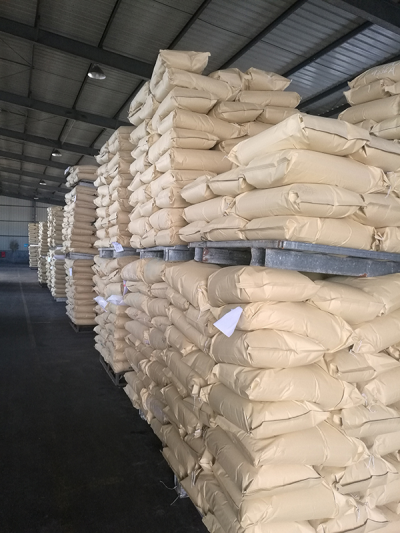
Anionic (HPAM) and nonionic polyacrylamide (NPAM) national testing standards:
GB/T 17514-2017 Anionic (HPAM) and nonionic polyacrylamide (NPAM) for water treatment agents
This standard replaces GB/T 17514-2008 Water treatment agent Polyacrylamide (PAM) in 2018-4-1
This standard specifies the requirements, test methods, inspection rules, labeling, packaging, transportation, storage, etc. of water treatment agent anionic (HPAM) and nonionic polyacrylamide (NPAM) products.
This standard applies to anionic (HPAM) and nonionic polyacrylamide (NPAM) products, which are mainly used as flocculants and sludge dehydrators for drinking water, industrial water and wastewater, and sewage treatment.
National testing standards for cationic polyacrylamide (CPAM):
GB/T 31246-2014 Technical conditions and test methods for cationic polyacrylamide (CPAM) of water treatment agents (implemented on May 1, 2015).
This standard specifies the requirements, test methods, inspection rules, and labeling, packaging, transportation, and storage of cationic polyacrylamide (CPAM).
This standard applies to cationic polyacrylamide (CPAM) products for water treatment agents, which are mainly used for flocculation in industrial water, wastewater and sewage treatment and sludge dewatering treatment.
Polyacrylamide (PAM) inspection standards can be queried by label number. When purchasing polyacrylamide (PAM), it is recommended to inspect the product quality according to national standards after receiving the goods. Avoid buying inferior products, which will affect the use effect and cause unnecessary losses.