Polyacrylamide, abbreviated as PAM, is a polymer linear polymer. Polyacrylamide (PAM) can be divided into four categories according to its type: cationic polyacrylamide (CPAM), anionic polyacrylamide (HPAM),Nonionic polyacrylamide (NPAM) and zwitterionic polyacrylamide. Different types of polyacrylamide (PAM) have different uses. Many customers mainly emphasize their molecular weight requirements when purchasing polyacrylamide (PAM), and what is the required molecular weight. So is the higher the molecular weight of polyacrylamide (PAM), the better? Is this really the case? The following Henan Laixing Water Purification will answer this question in detail.
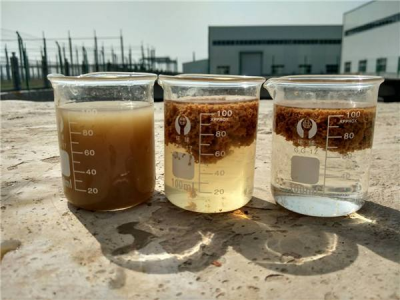
Before answering this question, we must first understand the role of different types of polyacrylamide (PAM) in order to have a general understanding of the specific molecular weight used. Cationic polyacrylamide (CPAM) is a commonly used material for sludge dewatering, suitable for treating sewage with negatively charged particles on the surface of suspended solids. Anionic polyacrylamide (HPAM) is suitable for treating positively charged effluent with high concentrations of coarse particles and suspended solids surface charged particles. For example, the treatment of neutral or alkaline wastewater such as steel plant wastewater, electroplating wastewater, metallurgical wastewater, coal washing wastewater, etc. Since nonionic polyacrylamide (NPAM) does not contain ionic functional groups, compared with anionic polyacrylamide (HPAM), it has the following characteristics: flocculation performance is less affected by fluctuations in the pH of water and salts, When the water quality is wastewater, the flocculation effect is better than that of anionic polyacrylamide (HPAM) flocculant, and the flocculation strength is stronger than that of anionic polyacrylamide (HPAM) flocculant. Amphotterionic polyacrylamide (PAM) is suitable for water with complex water quality or frequent changes in properties. Under the same conditions, zwitterionic polyacrylamide (PAM) has better performance than a single anionic (CPAM) flocculant in reducing surface tension as a water treatment flocculant.
In layman's terms, the molecular weight required by the customer actually refers to the length of the polyacrylamide (PAM) molecular chain. The molecular chain length of polyacrylamide (PAM) is calculated in units, such as 18 million molecular weight refers to polyacrylamide (PAM) products with a molecular chain length of 18 million units. The higher the molecular weight of polyacrylamide (PAM), the longer the molecular chain, and the greater the viscosity of the solution after dissolution, the greater the resistance in the solution. The molecular weight of polyacrylamide (PAM) is one of the main properties to identify its products, and many customers think that high molecular weight products are good, while low molecular weight products are bad. In fact, this is a misunderstanding. According to the water quality that needs to be treated, analyze the treatment effect of different molecular weights, and then select different molecular weight products according to the water quality and use. High molecular weight polyacrylamide does not necessarily exhibit excellent performance. Conversely, low molecular weight polyacrylamide does not necessarily have to be poor.