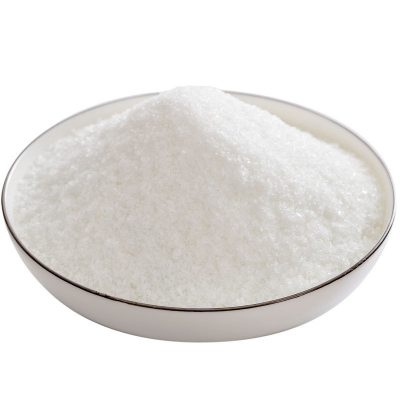
Polyacrylamide, abbreviated as PAM, commonly known as flocculant or coagulant, is a widely used linear polymer. Polyacrylamide (PAM) has a molecular weight between 400-20 million, and the solid product has the appearance of a white or yellowish powder, which is a colorless viscous colloid when dissolved in water. When the temperature exceeds 120°C, it is easy to decompose and reduce the use effect. The polyacrylamide (PAM) molecule contains a positive group (-CONH2), which can adsorb and bridge with suspended particles dispersed in solution, and has a strong flocculation effect. Therefore, it is widely used in water treatment, gold treatment, papermaking, petroleum, chemical, textile, mineral processing and other fields. Although there are many applications for polyacrylamide (PAM), it is necessary to choose the right type and the right molecular weight to achieve the ideal effect, and there are many factors that affect the choice of polyacrylamide (PAM) type. The following Henan Laixing Water Purification will answer you in detail.
The factors that influence the choice of polyacrylamide (PAM) type are as follows:
1. The charge of suspended particles in sewage
Cationic polyacrylamide (CPAM) is citation in the medium, which can make the suspended particles in the sewage flocculate and precipitate with negative charges, so it has a very good clarification effect on negatively charged sewage, which is several times or dozens of times that of anionic polyacrylamide (HPAM) or inorganic salts. A certain amount of polar groups in the anionic polyacrylamide (HPAM) molecular chain can adsorb positively charged suspended solid particles in water, so it is especially suitable for sewage with positively charged suspended solid particles.
2. The PH value of sewage
The molecular chain of nonionic polyacrylamide (NPAM) contains a certain number of polar genes, which can adsorb suspended solid particles in water, causing these particles to flocculate to form large flocculents, especially when sewage is wastewater, non-ionic is used Polyacrylamide (NPAM) will have a more pronounced effect than cationic (CPAM) and anion (HPAM). Nonionic polyacrylamide (NPAM) is widely used in chemical wastewater and waste liquid treatment, and municipal sewage treatment. Anionic polyacrylamide (HPAM) is suitable for use in wastewater with coarse suspended particles, high concentrations, positive charges, and neutral or alkaline pH. Anionic polyacrylamide (HPAM) is widely used in water industry, high turbidity water purification, sedimentation, coal washing, mineral processing, metallurgy, steel, zinc, aluminum processing industry, electronics industry and other water treatment, and can be used with polyaluminum chloride (PAC),Polyaluminum ferro chloride (PAFC) can be used together to improve the effect several times!
In general, when the PH value of sewage is neutral or alkaline, and the surface of suspended particles of sewage has a negative charge, the use of cationic polyacrylamide (CPAM) has a good effect, and the use of anionic polyacrylamide (HPAM) with a positive charge has a good effect, and the PH value of sewage is wastewater Nonionic polyacrylamide (NPAM) will be better than the other two types.