In the process of building piling or shield tunnel construction on the construction site, shield construction, tunnel segment cleaning, grouting pipelines, mortar hopper cleaning, underground flushing, etc. will produce a large amount of sewage, especially in water-rich formations, when encountering water inflow, a large amount of high-concentration mud water will be produced, and the wastewater contains a large amount of kaolin mud particles, cement, etc., and the wastewater applied on the ground is mainly produced by mortar mixing, washing, vehicles, road flushing, toilet flushing, etc. Wastewater needs to be treated before it can be discharged, and polyacrylamide (PAM) is used as a slurry precipitant, which has a significant and efficient purification effect for this type of wastewater treatment. So what kind of polyacrylamide (PAM) is used in the wastewater generated by construction site piling or shield tunnel construction? The following Henan Laixing Water Purification will answer you in detail.
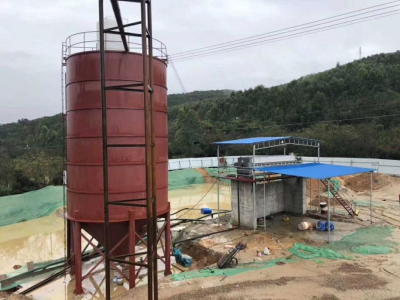
According to long-term tests, the sewage can be purified and meet the reuse or discharge standards after coagulation and precipitation by adding coagulants to polymerize aluminum chloride (PAC) and polyacrylamide (PAM) coagulation coagulant for underground untreated construction sewage samples. The role of polyacrylamide (PAM) in pile shield mud is adsorption, bridging, net trapping and electrical neutralization. The action of polyaluminum chloride (PAC) and colloidal particles in water has strong electrical neutralization reactions, adsorption and bridging effects. Some difficult-to-handle slurries need to be condensed or diluted with calcium hydroxide.
In the construction of piling shields, anionic polyacrylamide (HPAM) should be selected according to the characteristics of the mud. The slurry in different regions should be selected through small tests to select products suitable for use on site. Currently, most slurry treatments use anionic polyacrylamide (HPAM). Long-term tests of water purification according to the type have shown that the hydrolysis degree of anionic polyacrylamide (HPAM) suitable for slurry treatment is between 10-25% and the molecular weight is between 12 million and 18 million. The mud flocculation effect is good.